
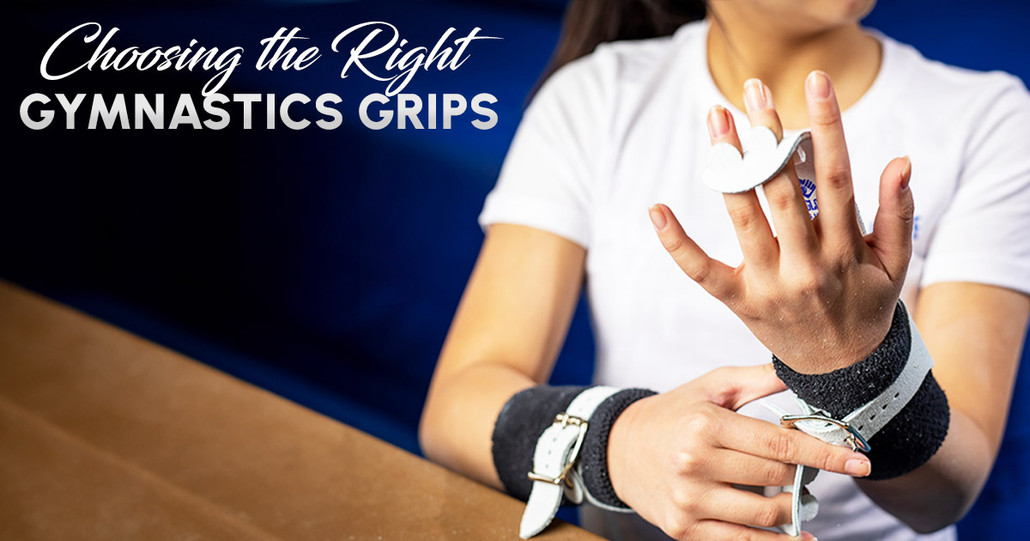
Choosing the Right Gymnastics Grips: A Complete Guide for Athletes
Posted by DGS on Apr 21st 2026
Grips are one of the most important pieces of equipment a gymnast will use, especially once you have progressed into more advanced skills. The right pair can improve how safe you feel on the bar, protect your hands, and help you train with more confidence. The wrong pair can do the opposite.
With so many options available, choosing the right gymnastics grip can feel confusing at first. The good news is that once you understand the key differences, it becomes much easier to find what works for your hands and training.
Start with the Basics: What Do Grips Do?
Grips are designed to protect your hands, reduce friction, and improve your grip on the bar or rings. Most advanced grips feature a dowel, which helps create a more secure hold during swings and releases.
While both men’s and women’s grips serve the same purpose, there are a few key differences:
- Uneven bar grips (women’s) are typically designed for a larger bar, often have a narrower profile, and feature two finger holes with a small dowel
- High bar grips (men’s) are designed for a smaller bar, may feel wider or more substantial, and feature three finger holes with a small dowel
- Ring grips (men’s) are designed for rings and feature two finger holes with a large dowel
Understanding your event is the first step in choosing the right grip. It’s important to use the correct grip for each apparatus. Uneven bar grips were specifically made to be used on uneven bars, high bar grips on high bar, and ring grips on rings.
Closure Types: Hook & Loop vs Buckle vs Double Buckle
One of the biggest decisions is how your grips secure around your wrist.
Hook & Loop Closure
Hook and loop (Velcro-style) closures are quick and easy to adjust. They are a popular choice for younger athletes or anyone who wants convenience during practice.
- Fast to put on and take off
- Easy to adjust between turns
- Lightweight feel
These are commonly used when just getting started with grips, due to the dexterity needed to fasten buckles. Some athletes transition to buckle or double buckle as they progress, for a more secure fit.
Buckle Closure
Buckle grips may offer a more secure, locked-in feel.
- More consistent fit
- Durable and reliable
- Typically offers a lower profile wrist cuff, compared to double buckle
Double Buckle Closure
Double buckle grips take stability one step further by distributing pressure more evenly across the wrist. The second buckle adds another level of adjustability, allowing each strap to be fine-tuned independently.
- Maximum security
- Preferred for high-level training
- More adjustability with two independent buckles
These are especially common where athletes are dealing with higher forces and longer swing cycles, and with advanced athletes looking for the most secure fit.
The Shape of Your Grip
Grip shape plays a big role in how the grip fits your hand and how it feels on the bar. Some grips are designed with a straight shape, while others have a more curved shape to better follow the natural contour of your hand.
Straight-shaped grips are only available in a regular width. Curved-shaped grips, on the other hand, are available in both regular and narrow widths, giving athletes more options when dialing in fit and feel.
Narrow Width
- Better for smaller hands
- Provides a better feel of the bar
- Common for younger or smaller athletes
Regular Width
- More surface coverage
- Preferred by athletes with larger hands
- Often used in men’s grips and advanced women’s grips
Choosing the right shape and width helps to improve overall control on the bar
Wrist Comfort
Another important factor is what you wear under your grips.
Wristbands
Traditional cotton wristbands add a layer of comfort between your skin and the wrist cuff of the grip.
- Help reduce rubbing and blistering
- Absorb sweat
- Create a more cushioned feel
If you plan to wear wristbands, be sure to try new grips on with them. We recommend working with your coach to help determine the best size.
Neoprene and Built-In Padding
Some grips include built-in padding, like neoprene wrist cuffs. Grips like the Gibson Just Right Neo and Bailie Super Soft feature a padded neoprene wrist area for added comfort.
Benefits include:
- Reduced pressure on the wrist
- Less need for separate wristbands
- More comfortable for longer training sessions
These are popular with athletes who want a softer feel without adding extra layers under their grips. The size chart for these grips takes the built-in padding into account when determining fit.
Finding What Works for You
There could be more than one perfect grip for a gymnast. The right choice depends on your event, hand size, training level, and personal preference.
As you choose your grips, think about:
- How secure you want the closure to feel
- Whether you wear wristbands or not
- The level of comfort you need at the wrist
- The width and fit in your hand
A well-fitted grip should feel like an extension of your hand, not something you have to fight against. While our size charts provide a helpful starting point when selecting grips, you should work with your coach to help determine the right fit.
Explore our full selection of gymnastics grips to compare styles, closures, and features built for both men’s and women’s events. Once you’ve chosen your pair, be sure to check out our guide on how to break in your grips so they feel secure, comfortable, and ready for training.